Here is a chance for everyone to take a look inside my most recent work. Physically there only exists 5 copies, but I would like to share it with everyone who wants to see it. I realize that some can be tricky to read as it is upside down, but the idea is that you should be able to read it from both ways as it tell two different stories.

Showing posts with label Books. Show all posts
Showing posts with label Books. Show all posts
Wednesday, 17 April 2013

Thursday, 7 February 2013
A Photowalk!
I have been rereading the
Moyra Davey essay on Photography and accident. It is funny how much more it
makes sense to me now than when I read it for the first time 1 ½ year ago right
after starting school.
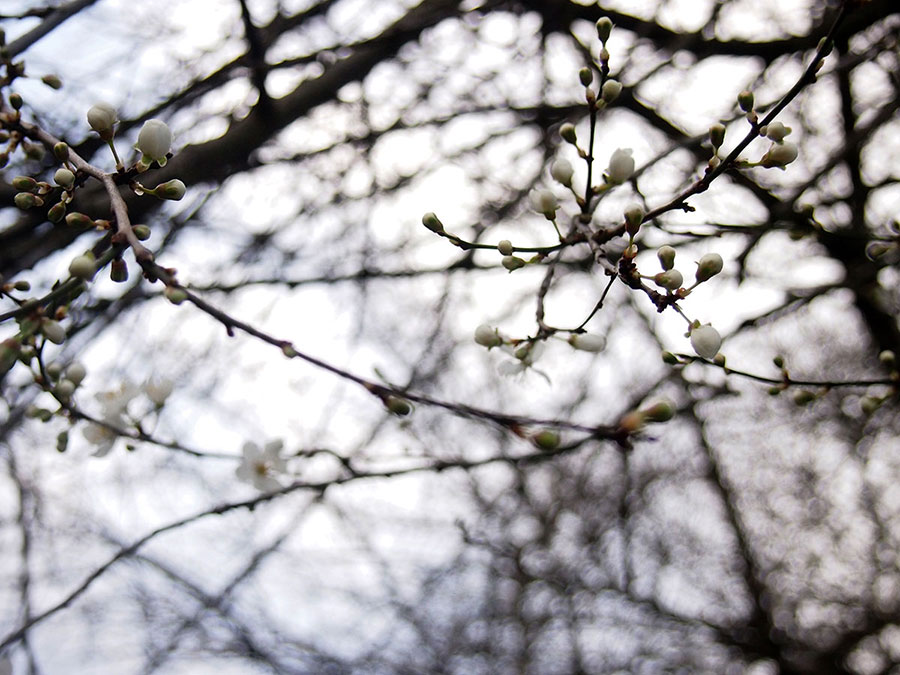
The other day I took a long
walk to get some thoughts together and brought both my analogue and digital
camera. Promised myself not to defer from taking all the pictures that I
wanted. I sometimes have a tendency to hold myself back. Maybe do to the mass
of photographs already collected through the past couple of years, but perhaps
also because of a slight dissatisfaction of the results, because in the quest
of the perfectly composed photograph how can one not be.
Bringing both my analogue
and digital camera and with an essay in mind I though I might try and implement
the way I take pictures on film onto my digital camera and actually let the
accident happen. It is a fact that I am much more spontaneous photographer when
it comes to the analogue medium. Sharpness is not of great importance to me, in
fact the more unreal the image seem to be, the more I like it. But with my
digital camera where I am able to see the result right away, and retake it if I
am dissatisfied, I am much more critical and far less forgiving.
So I engaged in my own
experiment, where I took the digital pictures much more sporadically and in the
process I somehow managed to gain some of the wildness and unreal feeling which
I cherish so much in analogue photography.



Wednesday, 30 January 2013
Essay In Love - Alain De Botton

I must admit that lately I have been in
quite a lot of bookstores and seen books offered by the author Alain de Button,
without really giving it any greater thought. My reading list is like the world
population; constantly increasing and with all the recommendations I get from
Tutors and friends I rarely find the necessity to sit down and research new
authors. It was only by total coincidence that I stumbled upon “Essays In Love”
by Alain De Button. An intriguing title considering my line of work and I am actually
surprised not to have found it before through my research. Maybe it was suppose
to happen, just like that magical meeting between a man and woman from which
love springs.
Opening the first page I discover it is in
fact not an essay but a story of love told from exactly that meeting until the bitter
end. The “I” narration had me guessing for a while if this was in fact based on
something true or if it was all fictional. He didn’t have me guessing for long
though. Some factual aspects of the story are not at all realistic. Living in
London (where the story takes place) knowing the way of living there in term of
jobs, economy etc there are many things, which I find to be unbelievable even
if the book has 20 years on it’s back.
However that said I enjoyed reading the
majority of it. First of all because De Botton manages to do exactly what is
lacking so much in Philosophy; to drag down all the theory and apply it to a
situation that any individual would be likely to encounter. Cause that is the
real means of this book. The story is somehow secondary but serves as a
platform for explaining in a relatable manner all the stages a relationship
goes through. The thoughts that one can have about the significant other and
the joys and doubts, feelings of despair and wishes for revenge after a break
up and how one after all so easily can fall again even after having a painful
experience.
The book was not only an interesting read
but from time to time I found myself laughing to myself, by his funny way of
describing some situations, drawing diagrams and making calculations for how
unbelievable lucky the two protagonists had been to run into each other.
I have to say that before reading it I was
questioning how much new he could offer considering the amount of literature
there is about this subject already, but I was surprised by some of his
statements (not all of which I agree with) and like all good authors he managed
to put some feeling into words that I have not yet been able to utter, even if
I have felt them.
Out of all I would like to highlight one
thing, which is something I have been thinking about a lot lately. De Button tries
to dissociate himself with the modern use of not only the word love but also
the cheesiness that commercial love today is engulfed in. (personally I think
that you have to distance yourself from that to be able to write anything
serious on this subject.) But especially being a writer in English you have to
come to terms with the fact that Love is a word, which is used loosely about
everything at anytime and is getting worn out, so that saying “I love you”
simply becomes a platitude among all the others. Our society loves love so much
that we have actually ruined its original meaning and are now only left with an
imitation, which is constantly trying to impose its idea of how love should be.
De Button describes a scenario where the
feelings of love is actually felt but can’t be uttered because the male
character can’t have his love associated with that kind of commercial/romantic
idea. And although the substitute of love in this story is something as soft,
sweet and pink as a marshmallow I get the metaphor and also the irony which is
actually that love is hard to describe without touching the cheesy side, even
for a philosopher.
With this book Alain De Button put himself
right into my consciousness, and I can’t wait to read his two books “the
romantic movement” and “How to have better sex” which I hope can give me even
more interesting thoughts on the modern relationship.
Sunday, 30 September 2012
A Lover's Discourse - Roland Barthes!

Over the span of the summer I have dedicated my reading to
one book in particular. “A Lover’s Discourse – Fragment” by Roland Barthes. In
short one might call it the encyclopedia of love. It is 80 chapters each dealing
with a notion related to love.
I must admit that it wasn’t an easy read. I have added many
new words to my vocabulary, but even though it took me almost 2 months to get
through it, the hard work was definitely worth it. Partly because I could
relate many of his thoughts to my own life and feel like I have got to know
myself better. Furthermore because it was really beautifully written (Of cause
I can only speak for the translated version). There are so many layers to this
book that it would be impossible to explain without writing an even thicker
book, but there are some of his general ideas, which I would like to highlight
in this post.
Although it is set up as fragments the protagonist in the book
is “the amorous subject - the person who is in love”, and the way he chooses to
deal with himself as an amorous subject and his “loved being - the one he
loves”.
On of the most interesting idea in the book and one, which I
have never given any thought before, is this:
Any requests to find love; to love somebody and hope for the
return of feelings; is a basic human wish to be brought back to infancy. To
dwell in the warm safe environment of the arms of the mother and her loving
embrace.
There is no desire to own the loved object but on the
contrary to belong to him. The amorous subject is dependant on the loved being
to ensure his happiness, like the child is dependant on the mother for nurture
and care in order to be happy. This is interesting because it tells us
something about the act of giving without receiving something back. It explains
to us why people are willing to live with suffering in the name of love. The
amorous subject gives himself to the loved being without expecting anything;
however in the hope that the being will embrace and provide him with the love
and care to nurture his desire.
The discourse is what the amorous subject express towards
the loved being. A discourse, which is an unuttered language, an inner dialogue
that one creates when one is in love. This discourse is spoken by 1000 of subjects,
only each individual speaks it differently and no one can understand one
another, not even two subjects who speak towards each other.
“The other speaks a
different world”
The discourse is a form of storytelling: A story that I
build inside my head about us. Therefore it is a discourse of solitude.
It is like Nietzsche said; “The world is my idea”.
Each subject bases the discourse on his own
image-repertoire. Images all
involving the loved being. Each amorous subject has his own reality in which the
loved being is the center.
“The other does not
speak but he inscribes something within each of those who desire him”
The loved object acts, the amorous subject interprets that
act. He takes every sign and filter through his image repertoire; images, which
are all involving the loved being. Each subject projects it’s own feelings upon
the sign coming from the other.
“ I seek to harm
myself, I expel myself from my paradise.”
Violence is closely connected to the discourse. The violence
is what I start imagining as soon as the amorous relation doesn’t go the way I
hoped it would.
Within the amorous relation there are always two people
telling their separate story of what is actually happening. They can never
affirm each other, just like two normal subjects can never affirm their opinion
of a single object.
Example: I (being the amorous subject) see you (my loved
being) with flowers in you hand. I instantly think they are for me. If they are
not I start wondering for who they might be. Maybe you have another one in your
heart etc? If you don’t return my calls I instantly feel that you don’t want me
anymore.
Each scene like that, which the amorous subject is exposed
to will scratch the wound of the soul and cause suffering. The amorous subject
creates his own clouds and in this way it is violent. It is violent on a mental
level. It hurts where no one can see it just like the discourse is spoken in a
place where no one can hear it.
“You don’t hurt me, but I hurt myself.”
The other is so unattainable because the amorous subject can
never fully grasp him. There is a certain element of absence although the other
is physically present. The amorous subject will always desire to get more from
the loved being than he can. Should he be in the position of knowing everything
about the loved being and every way to satisfy the desire of that being; then
he would change position and become the mother. The mother who know the needs
of her child, who will love the child no matter what, and who has no fear of
losing the love and devotion of her child.
Because of this dependency the loved being will always have
a large impact on the amorous subjects live. On his entire doing from the
moment they meet, where the amorous subject feels overwhelmed and live in a
state of euphoria, to the days where the first cloud appears. Then maybe the
end of things and how much the loved being and the discourse towards him can
still linger long after they have parted their ways.
“And, long after the
amorous relation is allayed, I keep the habit of hallucinating the being I have
loved: Sometimes I am still in anxiety over a telephone call that is late, and
no matter who is on the line, I imagine I recognize the voice I once loved. I
am an amputee who still feels pain in his missing leg”
This is more or less the essence of the book but if you feel
yourself intrigued I would recommend taking a deeper plunge and reading it. I am sure the reading of it can be done
in less than two months, as I was being over particular to be able to grasp and
understand everything.
Sunday, 17 June 2012
Invisible Cities!

It is hard to write something about Invisible Cities without
feeling inadequate to the beautiful language in which it is written. I can’t
speak of the original Italian version, but the English version is some of the
most poetic prose I have read in a long time if not ever.
This will not only contain a review but also my personal
interpretation of what this book holds. I felt like I was offered a rare gift
at the end of the book. One that made me want to turn back to the first page to
read it all again. What I’d just realized changed my whole perception of the
book. So I have to put in a little spoiler alert, if you should wish to read
this book on your own term without any premeditated ideas of what it might mean.
As with all interpretation I could be wrong. It could be an
idea that only I see; however it does shed a different light to every single
phrase.
Talking about the ending is in it self false, cause the book
is build up by various of small chapters in which we are taken through different
cities without any greater narrative. The traveler Marco Polo describes each
city to Kublai Khan. Marco Polo who has traveled near and far describes each
city with explicit detail. They are all assembled in Marco Polo’s mind, or are
they? Is it possible to reach them by travel or are they invisible cities?
Although the cities are different, they seem to resemble one
other, and are in fact the same. Each disgusted with a different name.
“It is known that
names of places changes as many times as there are foreign languages.”
Each city becomes like a maze. One you can never leave
because you are never taken out of there and told what is beyond the borders.
Describing the city of Cecilia near to the end, Marco Polo
speaks of his encounter with a goatherd. His opposite, a traveler of the desert
who can not distinguish cities from one another. He has no recollection of each
city, as Marco Polo has none of what lies between. Many years later they re
encounter. Marco Polo discovers that he has not yet left Cecilia, although
recollecting entering another city. They are trapped in this maze of the same
city that is everywhere.
Spoiler: The cities are in their essence an allegory for the
human mind and it’s capabilities.
The mind can go very far in it’s imagination, however just
as Marco Polo can’t see beyond the city borders, we as humans are only capable
of comprehending something to a certain point.
Our mind is our city wherein we are trapped. It is a maze,
which we are constantly trying to unravel but can never fully, just like the
streets of the cities create a maze from which can’t be escaped.
“If each city is like
a game of chess, the day when I have learned the rules I shall finally possess
my empire, even if I shall never succeed in knowing all the cities it contains.”
“From these data it is
possible to deduce an image of the future Berenice, which will bring you closer
to knowing the truth that any other information about the city as it is seen
today.”
“It is not the voice
that commands the story: it is the ear.”
I could keep on reciting amazing quotes from this book to explain
why I am convinced about the cities as a symbol of the mind. I will not. In
stead I suggest to read the amazing piece of writing.
Monday, 11 June 2012
In Praise Of Love!
Someone
encouraged me to start writing about the books that I am reading. I have
thought about it before. It always feels nice to read a good book and share the
essence of it with someone else in the hope that they would read it and enjoy
it just as much as you.
First book
I like to present is:
“In Praise
Of Love” by Alain Badiou.

I had high
expectations to this book, and been waiting for more than a year for the
English translation to be released.
This
compelling urge to read it came from an article I read in Purple fashion in
February 2011.
I was
sitting in a café and had to write down a large passage of the article on a
piece of paper simply because what he said spoke to something in me.
The passage
from the article more or less summed up the general thought behind the book,
and I have to say that all my expectations were met.
Like Milan
Kundera in “The unbearable lightness of being” Badiou talks about chance and
how when it come to true love, it is the only thing that really speaks to us. A
premeditated encounter can never have the same effect or value as an accidental
one, because there always lays a prior thought to it.
In today’s
dating culture people are prudent when it comes to finding love. Anyone can
find a match on an online dating forum. They are able to find a partner with
similar views; goals etc. and they can enter into a relationship almost without
risks. It is two people coming
together in the agreement that this is going to work out. Almost like an
arrange married, though not concerning the pride of the family but the safety
of the individual and its interests. Although it can be one of the most painful
experiences for the human, love is to endure despite the obstacles that might
be along the way.
Badiou
argues that true love in its essence is about exploring love from two points of
views despite of differences and coming together. He compares love to communism because the individual is put
aside and the though of what benefits the mass concurs over any narcissistic
gain.
This book
is based on a conversation between Badiou and Nicolas Truong and is an easy
read, even if you are not familiar with philosophical terminology. It is my
personal point of view that everyone, whether in or out of a relationship could
benefit from reading this book.
Not because it is something revolutionary, but it makes one put past experiences
into a new perspective, perhaps resolve present internal battles and even impose
the question of whether or not one is generous enough when it comes to loving
someone else.
Subscribe to:
Posts (Atom)