Here is a chance for everyone to take a look inside my most recent work. Physically there only exists 5 copies, but I would like to share it with everyone who wants to see it. I realize that some can be tricky to read as it is upside down, but the idea is that you should be able to read it from both ways as it tell two different stories.

Showing posts with label Photography. Show all posts
Showing posts with label Photography. Show all posts
Wednesday, 17 April 2013

Monday, 15 April 2013
It Only Blooms!
For the past three month I have been working intensely on this project. The idea of doing something around this Søren Kierkegaard quote started last summer, but up until now it has been resting in the pile of unrealized ideas.
The book shows a blooming process through photographs, seasonal and of the singular flower. Along side is a love story, which is related to the emotional seasons of love. The book can be read from both sides, one side telling the story of him the other of her. The photographs has been taken a bit everywhere but most of them doing the past month. The realization of the book (printing, binding etc.) took me a couple of weeks work in the workshop.
This book project is my first, but it is safe to say it wont be my last.


The book shows a blooming process through photographs, seasonal and of the singular flower. Along side is a love story, which is related to the emotional seasons of love. The book can be read from both sides, one side telling the story of him the other of her. The photographs has been taken a bit everywhere but most of them doing the past month. The realization of the book (printing, binding etc.) took me a couple of weeks work in the workshop.
This book project is my first, but it is safe to say it wont be my last.
Wednesday, 27 February 2013


Thursday, 7 February 2013
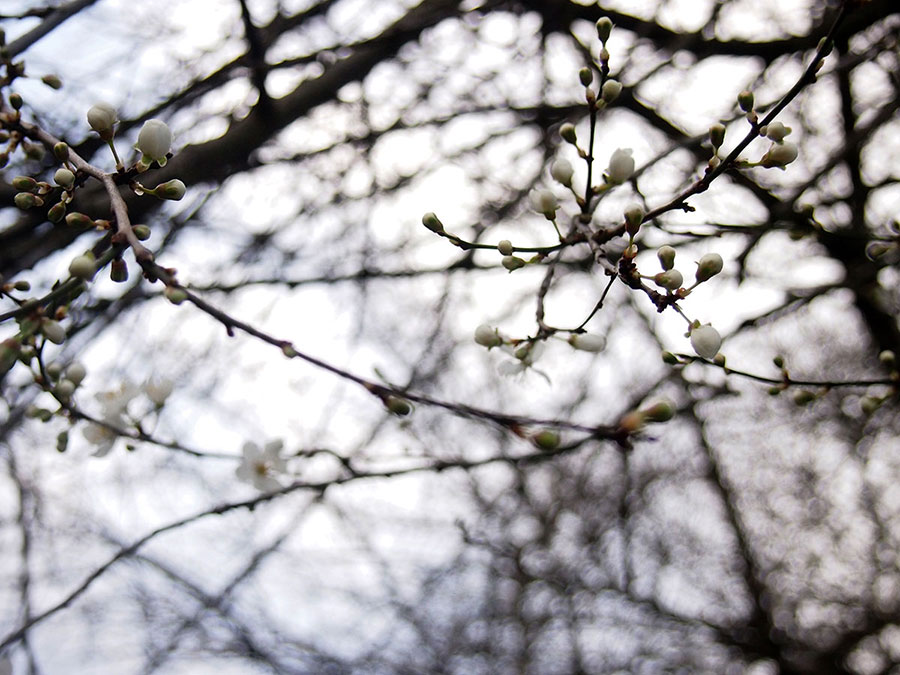
A Photowalk!
I have been rereading the
Moyra Davey essay on Photography and accident. It is funny how much more it
makes sense to me now than when I read it for the first time 1 ½ year ago right
after starting school.
The other day I took a long
walk to get some thoughts together and brought both my analogue and digital
camera. Promised myself not to defer from taking all the pictures that I
wanted. I sometimes have a tendency to hold myself back. Maybe do to the mass
of photographs already collected through the past couple of years, but perhaps
also because of a slight dissatisfaction of the results, because in the quest
of the perfectly composed photograph how can one not be.
Bringing both my analogue
and digital camera and with an essay in mind I though I might try and implement
the way I take pictures on film onto my digital camera and actually let the
accident happen. It is a fact that I am much more spontaneous photographer when
it comes to the analogue medium. Sharpness is not of great importance to me, in
fact the more unreal the image seem to be, the more I like it. But with my
digital camera where I am able to see the result right away, and retake it if I
am dissatisfied, I am much more critical and far less forgiving.
So I engaged in my own
experiment, where I took the digital pictures much more sporadically and in the
process I somehow managed to gain some of the wildness and unreal feeling which
I cherish so much in analogue photography.



Thursday, 8 November 2012
Symposium project-part 1!

What I am currently working on is based on “The Symposium”
by Plato. I read this text for the first time back in high school and have
always found it a great piece. The Past year I have been playing with the idea
to transform it into seven short films; each one representing one of the seven
speeches in the book.
For those who are not familiar with the Symposium: In short
it is a Symposium where great thinkers of the ancient Greece Phaedrus,
Pausanias, Eryximachus, Aristophanes, Agathon, Socrates, and Alcibiades) comes
together to have a drinking party, but because of festivities the night before
everyone is tired and they decide instead to each make a speech in praise of
Eros (the God of love).
The first speech I decided to deal with is the speech of
Pausanias. He talks about how there is an earthly and a heavenly love (Pandemos/Eros).
Eros has no female element. It is the love between men,
which exist out of the noble thought of gaining or giving knowledge. Pandemos on the other hand is the
heterosexual love; a love between mortals where the desire of the body is the
essential part. What I found interesting about this speech was that he talks
about how the lover stemming from Pandemos is never stable because the desire
of his object is never stable.
“…And therefore when the bloom of youth which he was
desiring is over he takes wings and flies away in spite of all his words and
promises; whereas the love of the noble disposition is life-long for it becomes
one with the everlasting”.
A promise made out of love is not a promise. As soon as the
love will die the promise will no longer exist and neither Gods nor humans will
condemn a lover for his transgression. It is this temporary state of love that
I used as outpoint for my research.
I started reading “Works of Love” by Søren Kierkegaard. It
feels quite nice for once to read philosophy in my mother tongue that is not a
translation.
Until now what struck me the most is that he in relation to
love between humans writes this:
“Love only blooms”
Whether it is one hour or seventy years it only blooms. I
find this statement to be very true and it relates to the Symposium project in
the sense that I have chosen to deal with the temporality of love and
relationships.
Everything that blooms also has the potential to die.
Flowers bloom but always die, and the plant may get new flowers but they will not
be the same. So to say that love only blooms, is to say that love will die.
In relation to this I will be looking at post break-up
emotions. Those promises that we give and the things we do together while we
are in a love relation; things that are easy to say and actions that seems
natural, which we don’t even consider because we are in love; how heavy do they
weigh when a relationship is over and how long does it keep having an effect in
our lives? What are the things we remember and why, and where is the lack?
Sunday, 2 September 2012
Jemand War-Leer!
Until Friday this week I am taking part of an exhibition called Raum in Betrieb! It is the 4th time this event takes place in Halle (Saale), Germany.
The idea is to take an empty house and for one week make it into an exhibition space. Each artist gets a room for their proposed project.
This work centers around the past life of a room. The piece consists of 6 photographs, all of objects that could have occupied the space and 4 different sound pieces to accompany them. The sound pieces are narrative moments. A glimpse into someones life.
Combined I hope to make the viewer compose their own stories of the people who once lived there.
The idea is to take an empty house and for one week make it into an exhibition space. Each artist gets a room for their proposed project.
This work centers around the past life of a room. The piece consists of 6 photographs, all of objects that could have occupied the space and 4 different sound pieces to accompany them. The sound pieces are narrative moments. A glimpse into someones life.
Combined I hope to make the viewer compose their own stories of the people who once lived there.
 |
| "Jemand War-Leer", copyright Dorthe Slej Pedersen 2012 |
Monday, 18 June 2012
I Don’t Cry Over Spilt Milk!
After a weekend of taking what could have been the best
pictures of my life. I return the camera and go to the darkroom. I was super
pleased with the last medium format black and white pictures I took, and I have
acquired a taste for black and white photography that I never thought I would.
To my horror vision all the negatives turn out completely
dark. My first thought is “what did I do wrong” but the truth is that
everything I did was exactly as always except the camera was different!
The only way I can express what I really feel is by lending
a word from the Danish or German language.
What I feel is ærgrelse
or ärger.
The closest could be regret or disappointment, but it’s
neither, perhaps a mixture? Cause can I regret something that I can’t blame on
myself? In fact I can blame no one ærgelse
is something that either can be with or without a recipient of blame. It holds
an element of disappointment and annoyance, but is much less stronger than
regret. The closest I could come to
this expression when looking thought the thesaurus is “vex”. I have never heard
any English speaking person use this term nor have I seen it written, whereas
in Danish and German language it is a word, which is in frequent use.
I am disappointed never to get to see my pictures. But
within lies also a feeling of wasting time. I have spent time walking around
choosing each frame carefully as there are only 12 pictures on each film and
put time into developing in the darkroom. All I am left with is 3 blank roll of
films, and that is ærgeligt/ärgerlich.
At the same time as having this feeling of ærgrelse, I can’t help but think that
this is the name of the game when you take analog photographs. It is always unknown
if anything will appear until the development is done. There is an anticipation,
which spans over a long period of time, from the moment where the film is
inserted into the camera until the negatives are finished developing.
This is why I don’t spend much time grieving over my loss.
My hands still smell of chemicals, I am 36 images short, but
tomorrow it will be forgotten and there will be new pictures to take.
Sunday, 3 June 2012
A Question Of Analog Photography As Medium!
This week someone questioned why I use analog photography. I
already knew the answer in fact if you are a frequent reader you will know that
I touched the subject briefly not so long ago. His question however made me
think about it again. What I wrote before still counts, but I guess that that is
more my personal reasoning and a romanticized idea of what a beautiful picture
looks like, than a justification of my use of this medium.
I still love analog photography for those reasons, but why
do I use it as the key way to take photographs in my practice instead of
digital?
Marshall McLuhan wrote: “The medium is the message”.
So choosing to use analog photography instead of digital will
obviously affect the way the viewer perceives it.
One argument was that using analog photography is often more
a fetish of the medium and the process in the darkroom. Especially because it
is now days possible to attain the same result with a digital print modified
thought Photoshop.
That may very well be. I am not so trained in Photoshop when
it comes to decay. But I would still argue that a thing that distinguishes the
two is, that one gets a different joy in taking a good analog picture than
building it with a modern tool like Photoshop. In Photoshop it is possible even
for the worst photographer to create beautiful pictures, and in fact today
there is not even a need for Photoshop anymore. Tools like instagram makes it
real easy for everyone to take a picture and process through multiple filters;
and in the end make the image much more interesting.
When I cringe of the thought of instagram and hipstermatic I
guess it tells that I am some kind of fetishist, because I value the process
behind the analog photograph. Thus it is as much a matter of the easiness of
these tools that makes it really hard to tell the skilled apart from the less
skilled, which I find a pity.
Although analog photography contains some luck, it is not
only about finding the right thing to frame. It requires a skill and a
craftsmanship that takes time to build up, and I feel that Instagram diminishes
this to a triviality.
Another argument was that the analog always holds a
reference to nostalgia.
In a way I agree with this statement. But aren’t photographs
in general whether digital or analog linked to nostalgia? Isn’t taking a
photograph always an attempt to hold on to a moment that already vanished and
keep it in ones memory?
Most of the projects I am working on are connected to
memory, so in that sense I could justify using the analog as holding on to
nostalgia. However the matter of justification seems unimportant, as it is as
much about my stubbornness because of my love for the medium.
I guess that it is always important to question oneself and
the motives for doing something particular instead of retaining an opinion or
method just for the sake of it.
Tuesday, 22 May 2012

Sunday, 29 April 2012
A Small Text About Why I Love Analog Photography!
One could write a pretty long essay about the greatness of
analog photography and why it is still preferred by many in the world of fine
arts. In fact that is already out
there (Sontag, W.Benjamin, R. Barthes). I won’t go into great depth. What I
have to say is much more a statement of my thoughts on this medium and why I
find it great.
I feel more and more that the camera you choose is the most
important thing, then the film. With that everything changes. It is a tool, and
getting to know your tool is of great importance. You will come to know its
strengths and weaknesses, and maybe this is why so many photographers swear to
one kind of camera. They know it works for them and produce equal to what they
want to express. A different camera takes a different picture. It can’t be
standardized and beautified through software.
When the picture is taken, you have to wait. Wait for the
rest of the role to be finished, wait for the development and the prints. I like
this process, the waiting in anticipation.
There is something very fascinating about the not knowing
part. I can take one picture. The motive is great the light seems perfect but
then when it is developed and printed it turned out very different from what I
thought. It is the element of surprise that makes it interesting, and the
fragility but also possibilities that lie behind every click. When I take a
picture with my analog camera I’ll take the risk of missing that moment. I will
not know how it will look. If I walk away from the frame I might loose it
forever.

Once again I have failed to put in the film properly, it
happened to me before, and it always brings back memories from a childhood
vacation where we had to climb the same cliff twice in a day as there was no
film in the camera the first time.
I discover it, as the film should be finished but just keeps
on giving and giving. I rewind it only to discover that the release is
immediate. I spend a couple of moment regretting driving around London with no
result. On the other hand, when I think about it I can’t really remember what I
for aimed and shot. So I stop regretting.
I am sure the image meant something to me in that moment
where I chose to aim, but now I can’t remember what I aimed for, and it is no
longer important.
Later in that day I remember some frames and I start
regretting again. I find myself going back to the same place and reshooting
some images. But it is done. The moment has passed the light is different,
there is no longer beauty in it, and I am disappointed.
My old Olympus pen has a light leak. Sometimes it is
noticeable sometimes not. But when noticeable it is noticeable, and covers most
of the picture. In a way I should stop using it. I know that most of the
outcome wont be good, but then there are the few pictures that might be, and I
find myself inserting another film every time the old one is finished. It is
somehow beautiful that the camera makes the decision of weather or not I get to
see my picture, some of them, which I don’t remember taking in the first
place. I am as little in control
as I can be. And yet I am trying to be.
I put in a black and white film, but I regret it the instant
that I see beautiful colors. They wont be transacted on to the film. I wish I could just make a quick shift into
color film and then back to the black and white, but that is impossible. I say
to myself that I am probably not a black and white person. But then when I get
the negatives back, scan them in as RGB I find a new beauty in them, and am
pleased of the way they turned out with their sepia. I wont desaturate them,
the slightly dirty off color look gives me a new satisfaction, and I wonder if
I should give the black & White film another chance to prove its worth.


For me analog photography is less about the notion of taking
a picture, but the process, the risk but also as with all photography, the
chance that encounters the moment. Pure luck of passing the good frame, while I
have bothered to bring my camera.
And then I love the way the
picture can blur in such an imperfect way, the dust on the negatives that
translates onto the print and the fact that I can have them in a box and take
them out and hold them as a physical object while I look through them.
Tuesday, 24 January 2012


Friday, 2 December 2011

Sunday, 9 October 2011
Shooting Gallery!
Last time I went to CO Berlin, was when I wanted to se
Robert Mapplethorpe in March this year. However at the same time, there was
another small exhibition taking place. This one caught my eye, more so than the
naked bodies and the beautiful arranged flowers in black and white.
A Dutch woman (Ria Van Dijk) has been going to the Shooting Gallery at the
local fair her entire life.
The deal whit the Shooting Gallery is, that you buy a
certain amount of shots, like when shooting at flowers. If you hit the mark,
you get a nice picture of yourself shooting.
And she collected 31 of these pictures throughout her entire
life. All these were exhibited.
To me she wasn't the only one to notice on the pictures.
The people
standing next to her, awaiting her shot, and the general surroundings were just
as significant.
These photos were not only a testimony of her life, but also
as a reflection of changing society.
Because it succeeded in capturing a time within this narrow reference,
Zitty Berlin also named it; one of the best curated photo exhibitions in a long
time.
Yesterday I came across these pictures online I though I
would share them.


The full roll of pictures you can find here.

Subscribe to:
Posts (Atom)